
- per page


The object of a translator should ever be to hold the mirror up to his author. That being so, his chief duty is to represent so far as practicable the manner in which his author's ideas have been expressed, retaining if possible at the sacrifice of idiom and taste all the peculiarities of his author's imagery and of language as well. In regard to translations from the Sanskrit, nothing is easier than to dish up Hindu ideas, so as to make them agreeable to English taste. But the endeavour of the present translator has been to give in the following pages as literal a rendering as possible of the great work of Vyasa.

The object of a translator should ever be to hold the mirror up to his author. That being so, his chief duty is to represent so far as practicable the manner in which his author's ideas have been expressed, retaining if possible at the sacrifice of idiom and taste all the peculiarities of his author's imagery and of language as well. In regard to translations from the Sanskrit, nothing is easier than to dish up Hindu ideas, so as to make them agreeable to English taste. But the endeavour of the present translator has been to give in the following pages as literal a rendering as possible of the great work of Vyasa.

The object of a translator should ever be to hold the mirror up to his author. That being so, his chief duty is to represent so far as practicable the manner in which his author's ideas have been expressed, retaining if possible at the sacrifice of idiom and taste all the peculiarities of his author's imagery and of language as well. In regard to translations from the Sanskrit, nothing is easier than to dish up Hindu ideas, so as to make them agreeable to English taste. But the endeavour of the present translator has been to give in the following pages as literal a rendering as possible of the great work of Vyasa.

The object of a translator should ever be to hold the mirror up to his author. That being so, his chief duty is to represent so far as practicable the manner in which his author's ideas have been expressed, retaining if possible at the sacrifice of idiom and taste all the peculiarities of his author's imagery and of language as well. In regard to translations from the Sanskrit, nothing is easier than to dish up Hindu ideas, so as to make them agreeable to English taste. But the endeavour of the present translator has been to give in the following pages as literal a rendering as possible of the great work of Vyasa.

The object of a translator should ever be to hold the mirror up to his author. That being so, his chief duty is to represent so far as practicable the manner in which his author's ideas have been expressed, retaining if possible at the sacrifice of idiom and taste all the peculiarities of his author's imagery and of language as well. In regard to translations from the Sanskrit, nothing is easier than to dish up Hindu ideas, so as to make them agreeable to English taste. But the endeavour of the present translator has been to give in the following pages as literal a rendering as possible of the great work of Vyasa.

The object of a translator should ever be to hold the mirror up to his author. That being so, his chief duty is to represent so far as practicable the manner in which his author's ideas have been expressed, retaining if possible at the sacrifice of idiom and taste all the peculiarities of his author's imagery and of language as well. In regard to translations from the Sanskrit, nothing is easier than to dish up Hindu ideas, so as to make them agreeable to English taste. But the endeavour of the present translator has been to give in the following pages as literal a rendering as possible of the great work of Vyasa.

No other person's life, biography, and death from the Dark Ages has been so recorded in such detail and under sworn testimony, witnessed by her friends and enemies. Her life stands as a testimony to the capability of women.

Andrew Lang was a writer, journalist, satirist, and historian. He was a skeptic of religion, perhaps an atheist. He authored 2 books on Joan of Arc, this one presented here and a children's book, that TGS also publishes.
Writings on hygiene and health have been accessible for centuries, but never before have books and magazines on these subjects been as numerous as they are today. Most of the information is so general, vague and indefinite that only a few have the time and patience to read the thousands of pages necessary to learn what to do to keep well.

An esoteric view of how all things are male and female, plus and minus. Really a good book in relating an understanding of the primary principle of the ying and the yang, the yoni and the lingham, the natural balance.

This work now recovers for us those epoch-making culture heroes who originated civilization, with their long-lost real names, personalities and authentic records of achievements and exploits, as truly historical kings of fixed dates, who have left us many of their actual contemporary inscribed monuments, along with full lists of their early kings and dynasties with their regnal years, extending continuously back to the rise of civilization; for they are disclosed as being already at that epoch a scientific people, accustomed to writing and calculation by calendar years and possessed of a keen historical sense.
This work now recovers for us those epoch-making culture heroes who originated civilization, with their long-lost real names, personalities and authentic records of achievements and exploits, as truly historical kings of fixed dates, who have left us many of their actual contemporary inscribed monuments, along with full lists of their early kings and dynasties with their regnal years, extending continuously back to the rise of civilization; for they are disclosed as being already at that epoch a scientific people, accustomed to writing and calculation by calendar years and possessed of a keen historical sense.

The reason for this criticism seems to be, that while one small set of students is interested in, and familiar with the themes examined in the first part (namely the psychological characteristics of certain mental states from which, in part, the doctrine of spirits is said to have arisen), that set of students neither knows nor cares anything about the matter handled in the second part.

Whatever you know or think you know, of the external world comes to you through some one of your five primary senses, sight, hearing, touch, taste and smell, or some one of the secondary senses, such as the muscular sense and the sense of heat and cold.
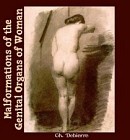
A study into the 'normal' and 'abnormal' genitals of a woman.
- per page
 TGS Authors
 Ancient Mysteries (70)
 As Above So Below (4)
 Beyond Reality (1)
 David H. Lewis (17)
 Health-Healing (5)
 Historical Reprints (78)
 Lost History (22)
 Money Economics (1)
 Mysteries (8)
 Our Mysterious Planet (14)
 Science Mysteries (7)
 Spirituality-Religions (7)
 Survival
 Texas Another World (1)
 The Goddess (1)
 The Human Mind (1)
 The Law (1)


